

The Cliff Rider - The Right Level of Risk?
In July we installed New Zealand’s first Kompan Cliff Rider at Aotea Lagoon in Porirua, bringing a genuinely new type of playground experience to NZ play spaces. Kompan pushed hard with this product to create something that combines dynamic movement, height and uncertainty in a way that feels adventurous, while still being designed as public playground equipment.
KOMPAN Robinia Cliff Rider - 2.38m - Aotea Lagoon, Porirua
When we shared a video of the Aotea Lagoon installation on our Facebook page it went viral, reaching more than 300,000 views in three days. We have never had a reaction like that to one of our posts before and the dozens of comments made for interesting reading. Most people thought it looked exciting and wanted to try it, take their children to it or see one installed in their own community. Others thought it looked dangerous, questioned how it had passed safety requirements or predicted broken bones and ACC claims. There was also plenty of humour, with people joking about hospitals stocking up on casts or suggesting everyone should try it before the “fun police” had it removed. We have probably gained an appreciation for the type of feedback Councils get on a daily basis.
The comments are obviously not a scientific survey, but a reaction of this scale does tell us something. The Cliff Rider has captured people’s attention because the risk element is obvious. It looks different, it moves differently from anything else in the playground space and this creates a strong reaction. We were very pleased to see that most of that reaction was positive, even where excitement was mixed with some nervousness. Comments such as “this gives me anxiety, but the kids would love it” probably sum up the response better than either the strongest supporters or critics.
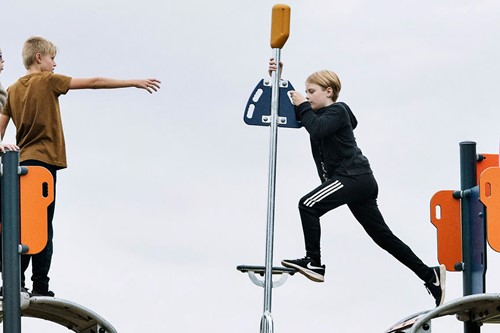
“Risky play” is often talked about within the play and recreation sector but it is not always well defined. That’s partly because risk depends on the individual child. An activity that feels manageable to one child may feel overwhelming to another. Adults too, often have very different perceptions of risk based on their own experiences. A useful general definition might be: freely chosen play in which children encounter uncertainty and the possibility of harm, and use their own judgement, abilities and emotions to decide how far to proceed.
See how KOMPAN Manages Cliff Rider Risks
The Cliff Rider fits that definition well. Children can watch others using it, assess the height and unusual motion and then decide whether they are ready to either commit to the ride or step away. Not every child will want to use it straight away and some may never choose to. This is not a flaw: meaningful challenge should require some judgement and should not feel equally comfortable to everyone.
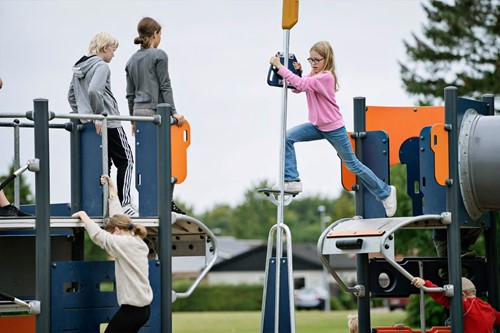
The mixed reaction may therefore be a sign that Kompan has found the right balance. If every new product is immediately understood and accepted by everyone, it is probably not pushing the boundaries very far. Genuine innovation often takes time to become familiar, particularly when the challenge is visible.
We saw a similar response when Playground People introduced Spacenets to New Zealand in 2002. While many people were excited to see real height returning to playgrounds there was a general feeling that these nets were just too high for the NZ market and it wasn’t until 2004 that Wellington City Council took the plunge and installed NZ’s first Spacenet on Oriental Parade. From there, it didn’t take long before Council and communities saw the play benefits and Spacenets became an accepted part of the NZ playground landscape.
See how the Kompan Cliff Rider was made
The same may happen with the Cliff Rider. It is new, it looks a bit freaky and it asks children to take on a brand-new challenge with a real risk of falling. The response to our video suggests there is a strong appetite for that kind of adventurous play, even if it takes a little time for people to get used to seeing it.